

Anatomy of a surfboard
Learn the different parts of a surfboard
From Weligama to Hiriketiya, every board tells its own story. Nowadays, the design and feel of your board is more unique and customisable then ever! The world of surfboard design has developed immensely over the past few decades and there are so many elements to choose from when buying a surfboard now.
Every detail of your board can impact how you will ride and feel on a wave. Therefore, gaining an understanding of a surfboard’s anatomy and how it will affect your waves is very important when it comes to choosing the right board for you. So let’s dive into all the elements of a surfboard, from the nose to the tail and even discuss how different fins and leashes can impact your surf.
Surfboard dimensions
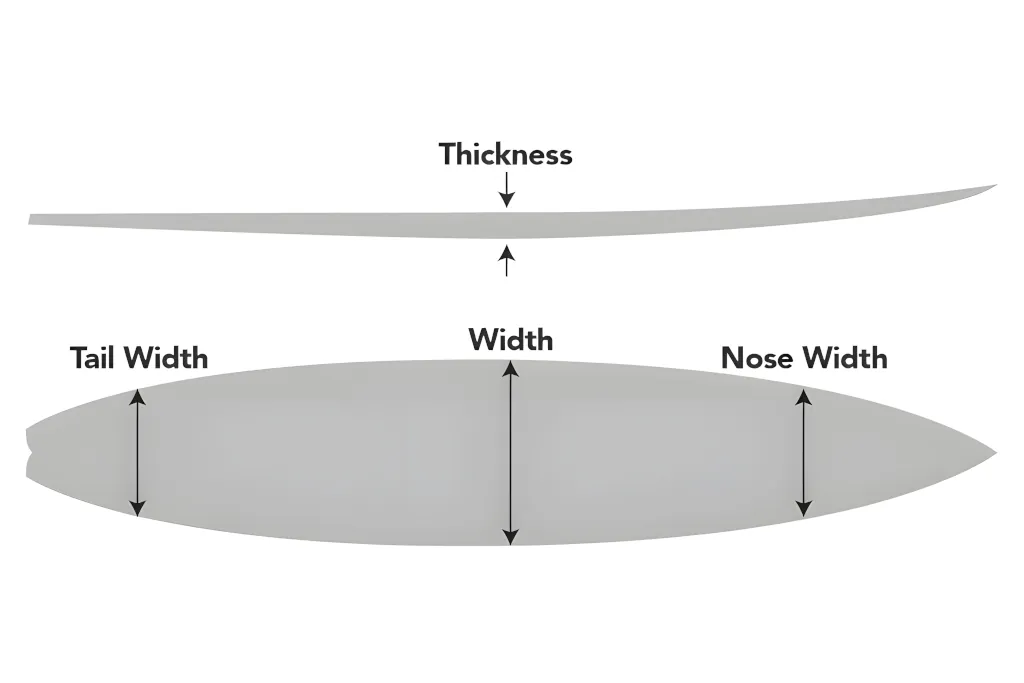
Surfboard dimensions include things like a surfboard’s length, width and thickness/volume. If you want to find this when buying your own board. you can usually find it on the stringer close to the tail. The stringer is basically a piece of wood that you find running down the middle of your board, providing your board with strength and flex.
The width of your board determines how stable your board will be. The basic rule is the wider the board the more stable and that’s why beginners should start with wider boards and then work their way down to improve manoeuvrability.
The thickness is a very important part of your board. The thicker the board, the more stable it will be and when you are just starting out in surfing it is especially important.
The shape of the surfboard
The nose:
Starting from the very top of the board, you have the nose. The width and shape of the nose will affect how your board moves through the water. A pointer nose is very good for cutting through waves and works well on steeper more powerful waves. A rounded nose is much more forgiving and allows for earlier entry into a wave. This is more ideal for beginner surfers on smaller, more mellow waves.
The tail:
The tail is at the back of the board and this influences the surfboard’s speed, control and agility. To put it simply, a wider tail is better for smaller waves and a thicker tail is better for bigger, more powerful waves. Below are the most common tails:
Squash or square tail:
This type of tail is a mix of a pin and a square tail, which provides more surface area. The sharper shape of the square tails makes for sharper turns, while the more rounded corners of the squash tail allow for hold. This is the most common tail in shortboards and you’ll see most pro surfers using this for beach breaks.
Swallow or Fish tail:
This type of tail is perfect if you enjoy speed and easy turning on waves. The shape is designed to enhance the grip of the tail for turning. If you surfing bigger waves the narrower swallow tails are very good options. It is also great for smaller waves when the conditions are more bumpy, as it allows you to surf smoothly through the water.
Pin tail:
This is the narrowest tail you will find. It is commonly used for guns or step-up boards, so for the pros in big wave surfing. This is perfect for bigger and more powerful waves because it provides good hold when you are gaining speed on the wave.
Round tail:
This type of tail is between a pin and a squash tail. It usually feels quite a bit smoother to surf and is good for waves where you are practising multiple turns on one wave.
Diamond tail:
This tail allows for more pivot and sharper turns than, say, the round tail does. It is quite stable and allows for easy manoeuvres. This tail will make turns feel a bit looser and is good for smaller waves where fast turns are needed.
The rocker:
Put simply, the rocker is the amount of curve on your board from the top to the bottom. In general, less curved and overall centred rockers will help your board glide and paddle more easily, and this is more suited to beginner surfers. A more curved rocker will help experienced surfers who are looking to use every area of the board for more speed and power for turning.
The rails:
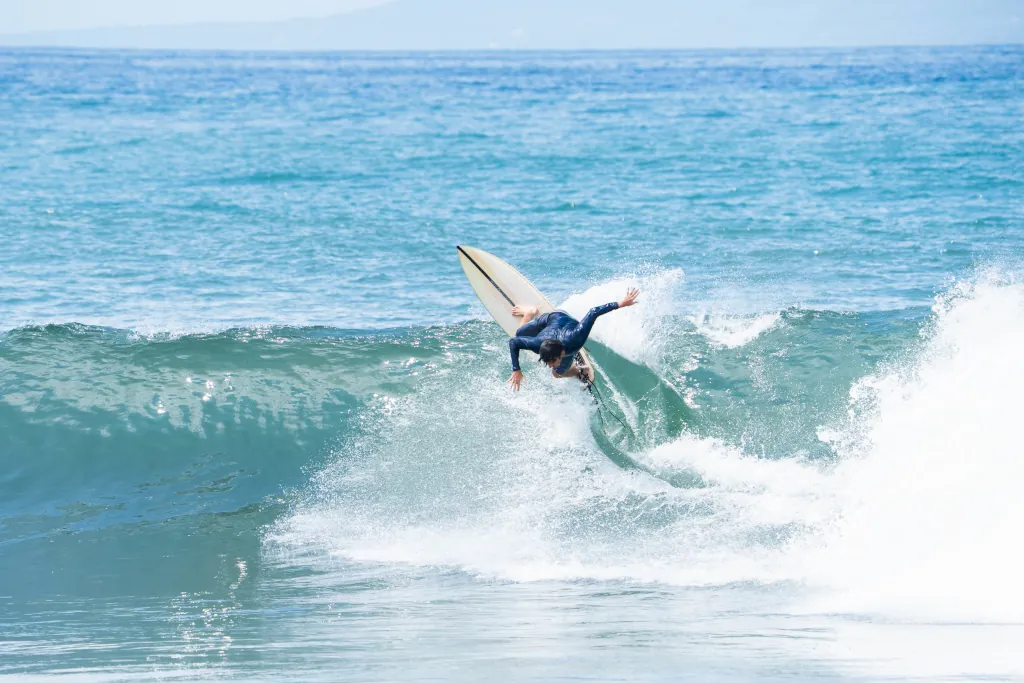
The rails are the edges of your board. The shape of the rails change how your board flows through the water.
Soft rails are rounded and smooth and these enhance the stability of the board. These are useful for smaller waves because they do not need lots of power to perform. Soft rails are best for beginners and longboarders.
Hard rails are sharper and help the surfboard to change direction faster and are therefore better for shortboarders or more experienced surfers. This type of rail is better suited to more powerful and bigger waves.
The deck:
The deck is the top side of your surfboard and can be classified into three types:
1. Dome deck:
This is the most common type of deck. It has less volume on the rails and more volume in the centre.
2. Flat deck:
This type of deck has wider rails and less volume throughout the whole board. Many high-performance boards have this type of deck.
3. Step deck
This deck has a platform with more volume in the centre and the rails are thinner/lower. When you look at the board from the side of the rails, the middle will look raised, like a step.
The bottom:
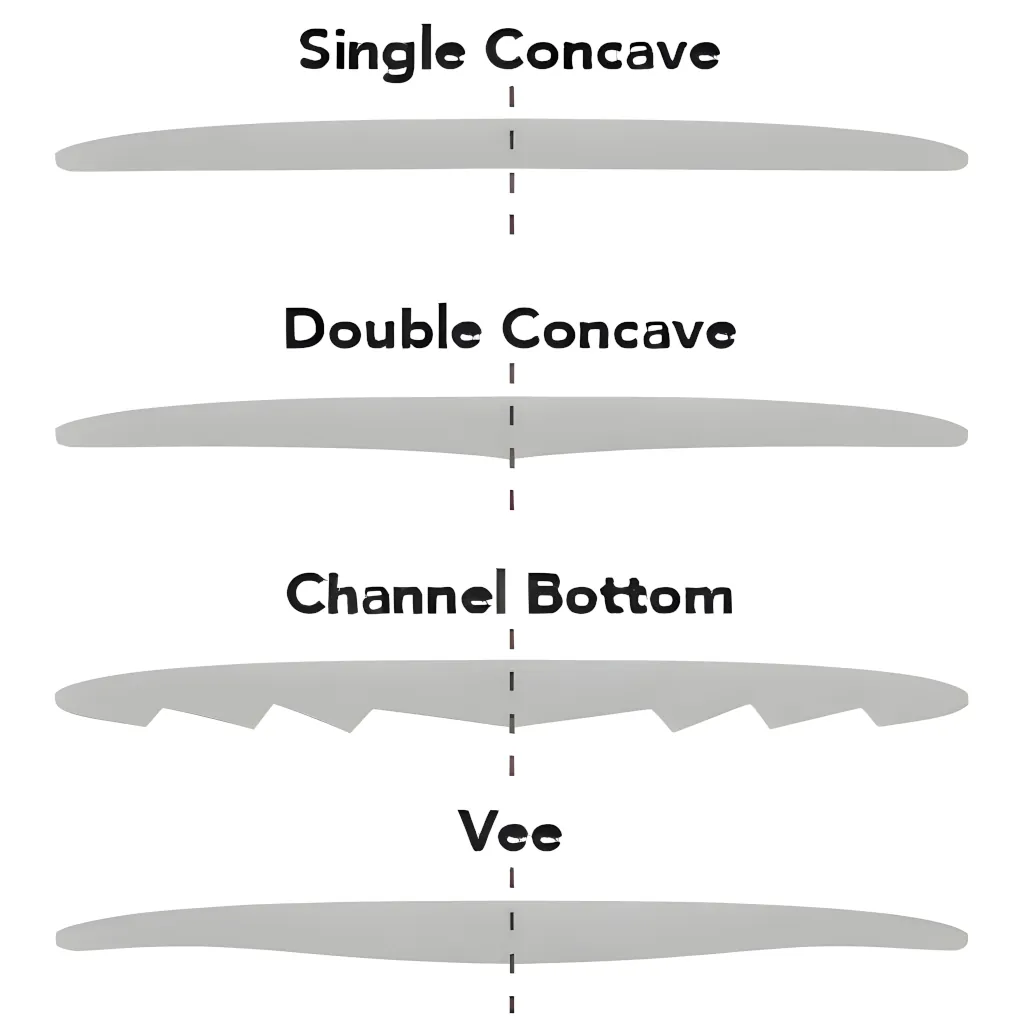
Like the name states, this part of the board is at the bottom side. This plays a big role in how the water flows and how the board performs on the water’s surface. The most common bottom is below:
1. Concave bottom:
This bottom comes in two types, single concave and double concave. The bottom of the board is dug out and this influences how the water moves along the surface. It changes the speed and lift of the board. Generally speaking, double gives more lift and single is better for controlling the speed on waves with more power.
2. Convex bottom:
A convex bottom is when part of the bottom dips below the rail line. These are found in longboards because it is very good for the stability of the board. There is either a Vee or a belly convex bottom and each suits different styles and conditions.
3. Flat bottom:
A flat bottom is a basic flat surface that is level with the rails of the board. This gives stability and lots of buoyancy. This makes for a very easy time catching waves and is therefore well-suited to beginner surfers.
Surf essentials: what else does your board need?
The fins: your surf GPS
Your fins are your way of navigating through the water and give you control and stability in the water. Without your fins, you’d spend your session sliding and slipping through the waves with no control. It is not as simple as just getting random fins, there are different types, ways to set them up and this will change your surfing experience and feel significantly.
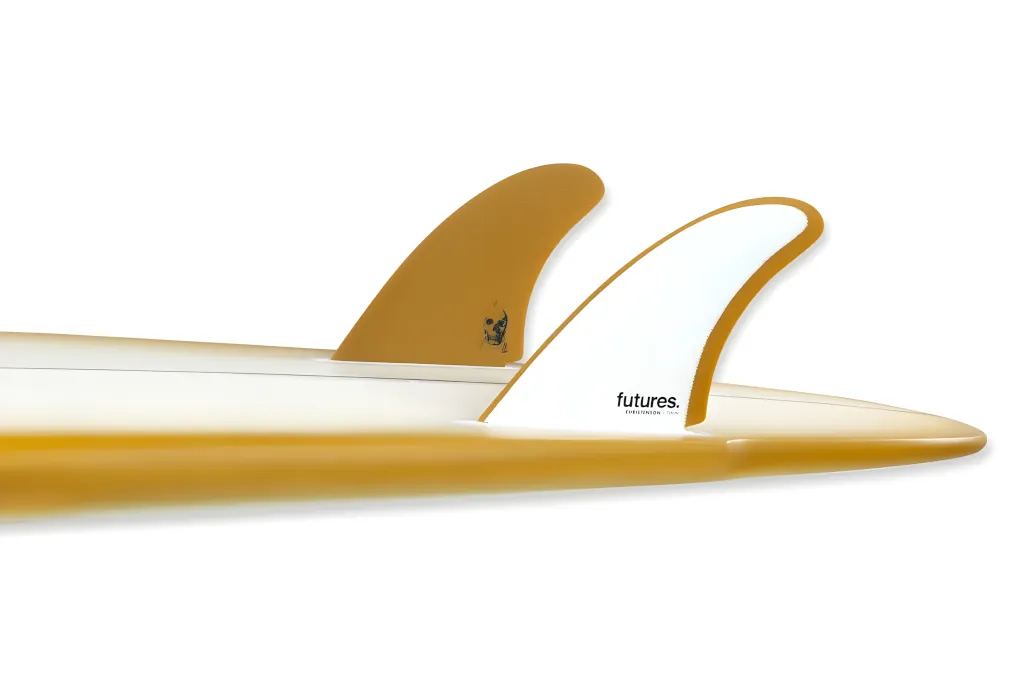
Each board will have a fin box and this is at the tail of the board where you will attach your fins to the board. There are two different types of fin boxes – FCS and Futures.
FCS stands for Fin Control System and is the most common fin system. The fins have two plugs that are secured into the board using screws.
Futures are known for their strength and durability and are the favourites for many famous surfers. They have a single, long tab that runs through the base of the fin and this is also secured with a screw. They are really easy to fit in and are less likely to cause damage to your fin box.
The different setups for fins
Single Fin:
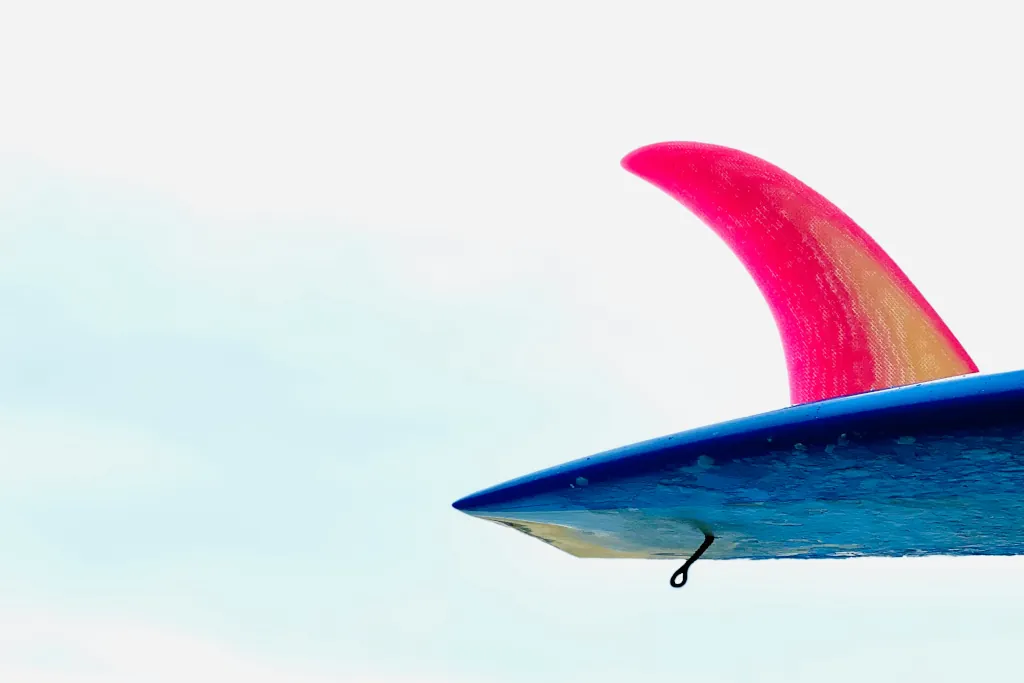
This style is used for longboards and old school retro boards. This is a classic and very stable setup and allows for a smooth and flowy ride.
Twin Fin:
Two fins make for a very manoeuvrable and fun ride. This is not ideal for big waves, but it is suited to more speed and a flowy feeling on the waves. A common board this is found on is fish-style boards.
Thruster (Tri-fin):
The most common setup is with three fins and this offers a good balance of speed, manoeuvrability and control. This is used on many types of boards, from shortboards to longboards. You can also change it up and make this configuration into a twin or single fin!

Quad fin:
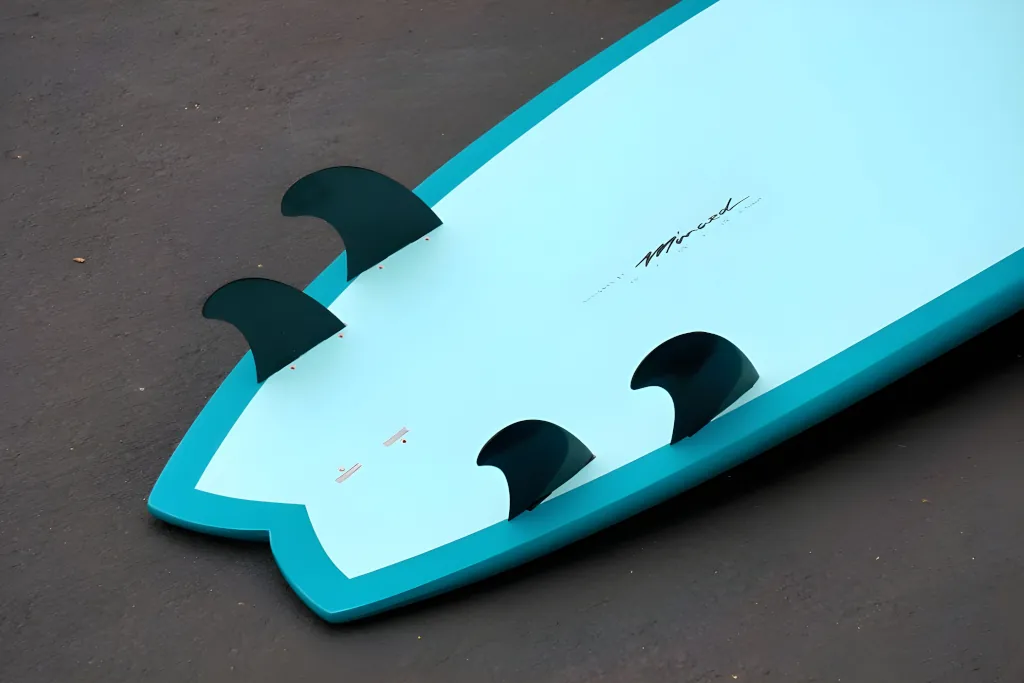
The quad fin, like the name suggests, is a four-fin setup that is perfect for speed and control. Depending on how it is set up the quad fin can give you extra speed on the small waves or good hold on the big waves.
The leash:
The leash of your surfboard is your lifeline in the water. This is essential to have and keeps you connected to your board at all times. The leash ensures a quick recovery after losing your board in a wipeout, allowing you to climb back on your board quickly and catch your next wave.
Don’t lose your grip: wax and tail pad
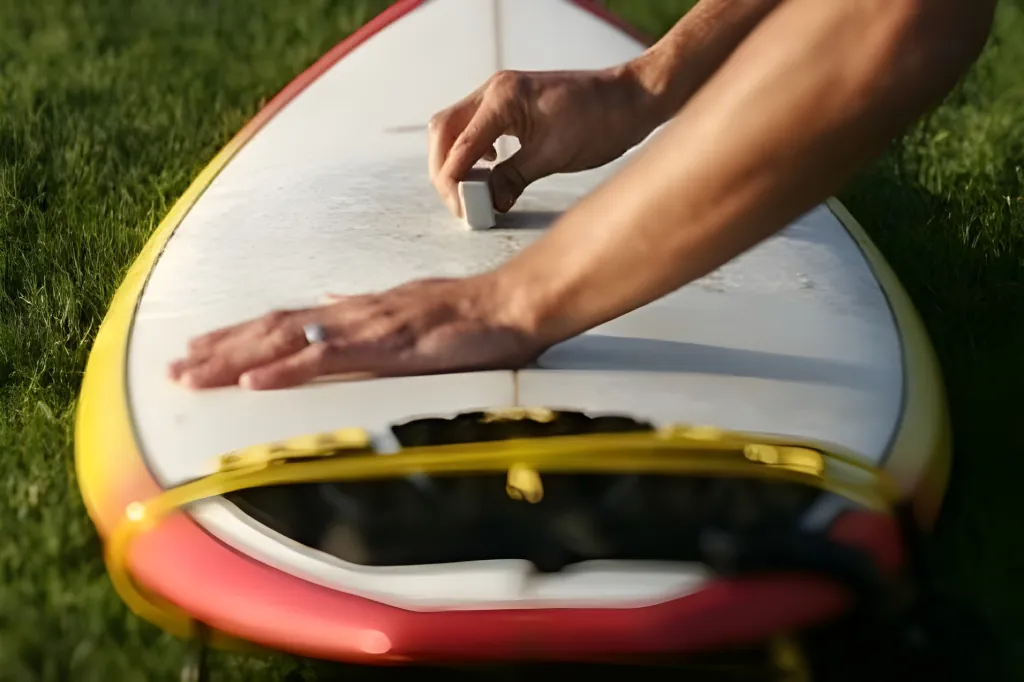
Wax is an essential part of surfing, and without it,t you’d be slipping off your board every time you try to catch a wave. Make sure that you use wax when preparing for your surf sessions at Kima so avoid slipping all over.
When you start to move up levels and down surfboard sizes, it might be time to consider getting a tail pad. This is placed at the tail of your board and gives you grip and control, to ensure you can do more aggressive turns and manoeuvres.
With many different types of waves come different surfboards, features and accessories. At Kima, we will help you to choose the right board. You can even choose from our top-quality brands, including our Premium Surfboard Collection.
Ready for your next surf adventure?