

Surf Etiquette
What you need to know before you surf
Surfing is an amazing sport that has gained a lot of popularity in recent years. With an increase in popularity line-ups have become more and more crowded. Places that used to be dotted with only a few local surfers are now packed with locals and tourists, who all simply want to have fun in the water.
This is why surf etiquette is something that every surfer should learn before getting into the water. It’s all about the unwritten rules of surfing and ensures that everyone has a good time. These unwritten rules can be applied to all lineups and are used to avoid accidents and generally just make surfing more enjoyable and fair for everyone.
Here’s a clear and compact checklist to follow when surfing:
- Don’t drop in, its disrespectful and creates tension in the lineup
- Don’t snake waves: it’s better to wait your turn and let everyone have a fair chance of catching an epic wave.
- Pick the right surf spot: surf your level and always ensure you check the conditions.
- Hold on to your surfboard: no one likes a surf board flying into them.
- Communication is key: say which way you’re going and surfing with others will be simple.
- Don’t get in the way: use the channel for an easy paddle out.
- Say sorry: if you make a mistake, apologise, its the right thing to do.
- Respect the locals: respect and be respected.
Don’t drop in
The first and probably one of the most important rules about surfing is to never drop in on someone in the lineup. The surfer who is closest to the part of the wave that is breaking (the peak) has priority to surf that wave. If someone takes the wave in front of the surfer that is in priority then that person is dropping in. This should always be avoided since it is very likely to cause a collision and it is also very disrespectful. Rather wait your turn and let everyone in the lineup have a fair chance at catching their waves.
Sometimes beginners with limited experience can drop into someone’s wave by accident. You can follow these 3 tips to lower the risk of dropping in accidentally.
- Always check the peak as you are paddling for a wave to make sure that no one else is paddling for that wave and has priority over you.
- Listen to other surfers in the water. Someone may see that you are about to drop in and call you to stop.
- In the situation that you’ve already caught the wave and dropped in, you can always try to exit the wave over the shoulder and allow the person in priority to continue on the wave.
Don’t snake waves
A disrespectful action that happens quite often in the water is snaking. This is when a surfer paddles around another surfer to be closer to the peak, taking “priority of the wave” and catches it. Snaking doesn’t usually happen by accident because it requires strong paddling skills and an eye for reading the waves. Therefore, snaking is seen as even more disrespectful than dropping in and should be avoided as it creates tension in the water.

Pick the right spot to surf
It’s important to choose a spot to surf based on your surf level. Surfing in spots that are beyond your level can be dangerous for you and those around you. Take your time when progressing up levels and down boards, as this is the best way to build good habits and it helps you feel more comfortable in the water.

If you are unsure about which surf spot is best for your level, ask a more experienced friend or go with a surf guide. At Kima, we have created a six-star session planner to help you choose the right spots for you. The surf sessions at Kima are separated into six different levels based on the skills needed for each level and the conditions of the surf spots. Our surf guides are always around to help you decide which spot is best for you and will be around to help out in the water at all times.
Hold onto your surfboard
Make sure to always hold onto your surfboard because getting hit by a surfboard isn’t the ideal situation for anyone. Sometimes when you get caught on the inside with whitewash waves coming at you it may feel tempting to let go of your surfboard and dive under the waves but this can be very dangerous to people around you. Throwing your board can cause injury to others and is seen as very bad surf etiquette.
What you can do instead is when you see white water coming towards you, you can do a turtle roll or a duck dive. During your pool session, which is included in your Kima package, you can learn both of these skills from our experienced surf guides.
If you are a beginner taking part in our 5-day Learn-to-Surf Program, we will teach you how to do a turtle roll to protect yourself and others in the water.

Communication is key
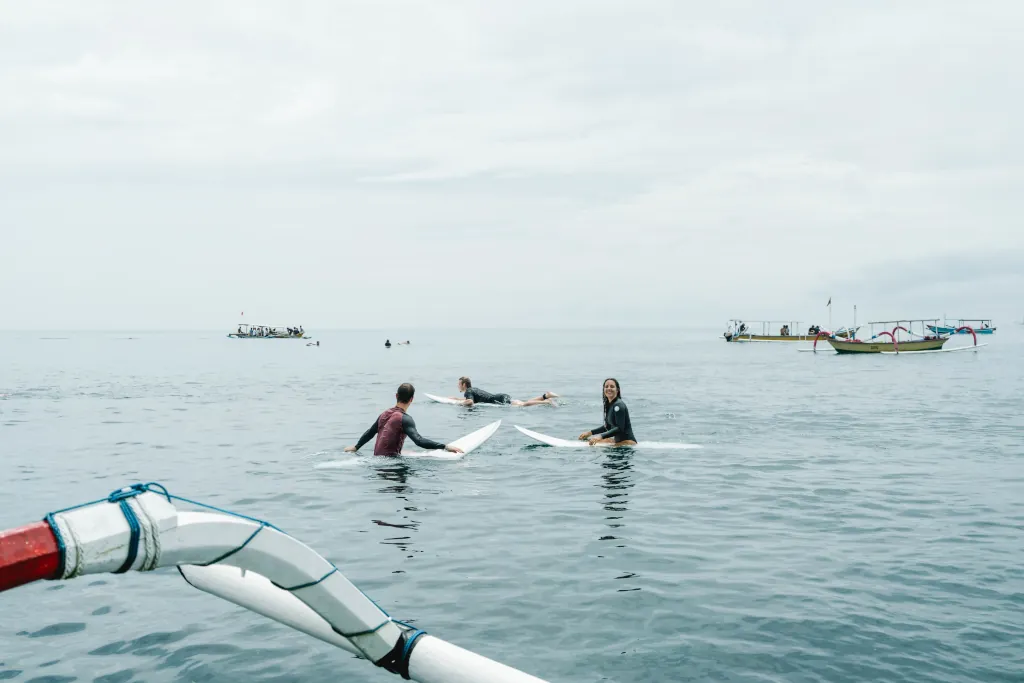
Communication is very important to ensure everyone is safe in the water. When paddling into the same wave, especially an a-frame which is open to the right and left, simply communicating which way you each are going will allow both people to catch the wave one left and one right.
Don’t get in the way
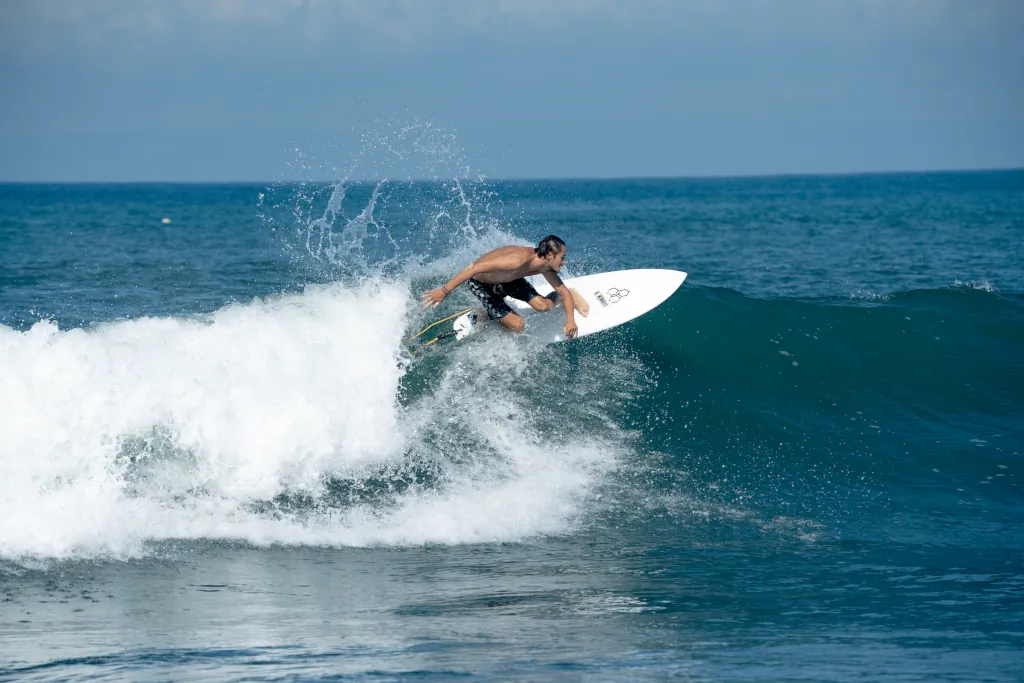
As you are paddling out after you’ve caught a wave or after a wipeout make sure you watch for other surfers on the next waves. Always be sure to paddle around the break through the channel where the waves aren’t breaking. It is best to use this channel and avoid the “impact zone” where the waves are crashing. This puts you in a safer area where it is less likely that you will get in the way of another surfer and cause an injury.
Say sorry

Sometimes mistakes happen in the water and if you accidentally do something that is against the rules, it’s best to find the person in the lineup and apologise. We all need to learn and making mistakes is part of the process of becoming a better surfer as well as becoming more aware of our surroundings when surfing.
Most times, experienced surfers will tell you if you do something wrong like if you drop in on their wave. Most will not get mad, as everyone was a beginner at some stage, unless you repeat the same mistake.
Respect the locals
Locals are known as the people in the lineup with a long history with the surf spot. The basic rules of surf etiquette can be used all over the world, but keep in mind that local surfers may have rules of their own that you should also be aware of when surfing in a new spot. In many spots, locals believe they have priority to surf the wave regardless of their positioning. But, a simple way to be around locals is to be respected.
Enter the lineup slowly, don’t rush to the main peak where all the locals are. Position yourself a bit more on the inside or wait for your turn. Communicate and greet everyone in the water and be friendly. By doing this, you’ll slowly get to know the people and the waves and at some point you may even be sharing the peak with all of them.

Just remember these basic rules in the water so that everyone can have fun and enjoy their time out surfing.
Stay safe, respect each other and have fun out there!