

5 Essential Tips for Buying Your First Surfboard
Getting your first surfboard is a memorable moment for every surfer. The variety of available shapes, dimensions and board styles can make a challenging and slightly intimidating undertaking. This process requires knowledge, patience and a few tips to make sure you choose what is right for you. Here are 5 things you must know before purchasing your surfboard. Explore our collection of boards and get ready to catch some waves with Kima Surf.

1. Your Style of Surfing
The most important part of selecting a new surfboard is knowing your level because this determines the board you need for further improvement. Are you a beginner just starting out, an intermediate surfer aiming for development or an advanced surfer seeking a high-performance model?
There are tons of different surfboard types out there and the gear a beginner needs is completely different from what you’ll want once you’re confident at catching waves. A board designed for barrels is nothing like a noserider, a big-wave gun or a high-performance shortboard — each one is unique and built for specific conditions.
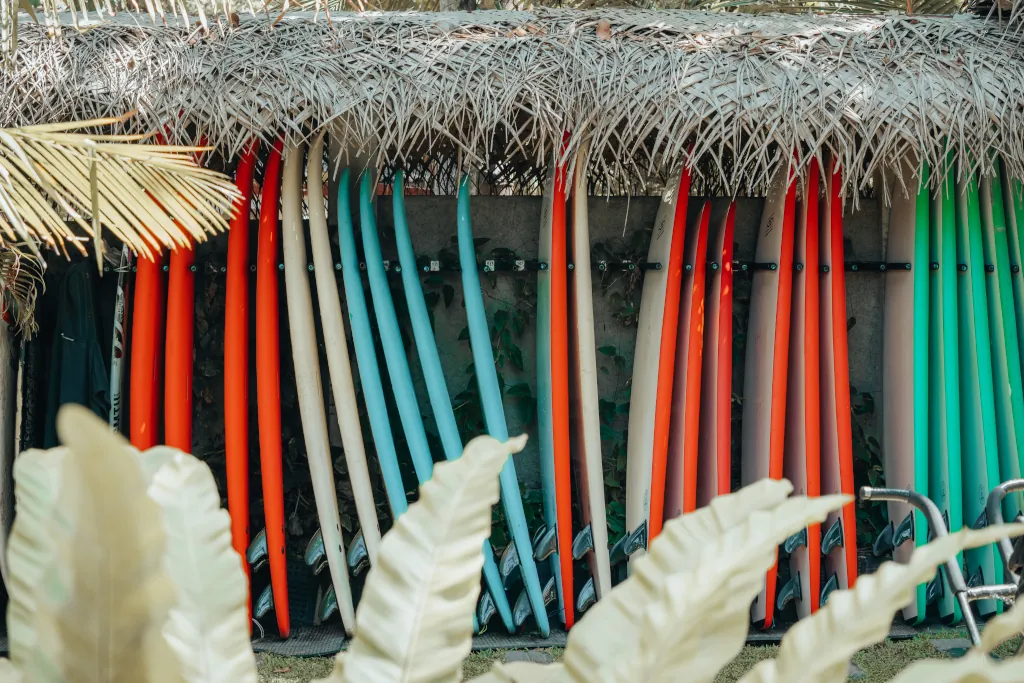
If you’re just starting out you need a great beginner surfboard that will maxmize your wave count. This is the fastest way to learn how the ocean works and will help you in developing your style. We usually recommend an easy-to-use longboard or a soft top board like the standard softbaords from Flowt or Ocean + Earth that we use in our 5-day Learn to Surf Program. They’re super stable and easy to paddle with which makes learning fun!
Intermediate surfers often find the perfect balance of stability and performance in a funboard or hybrid shape. Advanced riders who are tackling big waves or reef breaks usually prefer the control and quick turns of a shortboard. The golden rule? Always try out different boards, sizes and shapes before you buy. Our Premium Surfboard Collection has tons of high-quality boards you can test during your stay at one of our Kima Surf Camps in Sri Lanka.
2. Match the Board to the Break
The waves you plan to surf are an important factor when it comes to selecting the right board. Understanding the different types of surf spots. The envrioment dictates the equipment. Different types of waves call for ifferent sizes and types of boards:
Smaller Waves:
For those gentle rolling waves often found at beach breaks you need buoyancy and glide. A longboard or a funboard is often your best bet. These boards give you enough surface area to catch the slower-moving swell.
Larger & powerful Waves:
If you’re tackling bigger waves or faster more hollow sections over a reef you need precision. A shortboard provides the speed and control that is necessary for those powerful turns.
We know choosing your first board is a big decision. A mid-length board is often the perfect investment because it handles a wide variety of waves, giving you a steady and more reliable foundation. As you get better you can explore specialized shapes to truly match your style and local conditions. Many surfers eventually have a “surfboard quiver” which is slang for a collection of boards. Each board is designed for different conditions, it’s not about the constant buying but rather about finding the right tool for the job so you can ride any wave, any day!

3. Focus on Volume Not Just Length
When it comes to surfboard, size matters but we’re not just talking about length. While length used to be a significant faxtor the emphasis has shifted to volume in modern board design. The rule of volume based on your desiered surfing style and body weight plays a crucial role in choosing the right board.
The key to determining the right volume (in litres or ‘L’) is based on your skill level, weight and the type of waves you want to tide. Beginners should generally start with a board that has volume nearly equal to their weight in kilograms for maximum float and stability. Advanced surfers will opt for a lower volume for incrwased maneuverability and performance.
A board with a higher volume will be more stable and better suited for larger or beginner surfers while a board with lower volume will be more flexiable, responsive and better suited for more experinecd surfers. Don’t worry about what other people think about your board choice and don’t buy a board because it looks cool. Remember that the entire point of surfing is to have fun and with that you need a board that will help you catch as many waves as possible.

Examples of Surfboard Volume in Litres by Surfboard Types:
- Shortboards: 22L – 35L
- Fishes: 25L – 45L
- Funboards / Mini-Mals: 40L – 60L
- Longboards: 60L – 100L
4. Test Before You Commit: Renting vs. Second-Hand
Before committing to a big purchase make sure you test before you invest! The best way to find out what size and shape genuinely fit your style and level is by renting a board first. Testing different shapes and sizes gives you insight into what feels comfortable under your feet. At Kima whether you are surfing Bali or Sri Lanka we offer a massive variety of surfboards. You can choose anything from beginner soft-tops to high-performance boards from our exclusive 5 Star Quiver Boards collection, featuring top brands like KT Surfing, AIPA, MISFIT SHAPES, SMTH, and Gerry Lopez. Our experienced Kima surf guides are always on hand to help you pick the perfect board for your level and the day’s conditions. Plus you can easily swap your board to try out a new size or shape! Renting your board with us is totally worry-free thanks to our optional board insurance which covers the cost of any necessary repairs.
The second-hand market is another great option for your first surf board. You can find plenty of good quality used boards in online forums and local surf shops. Many temporary surfers who finish their travels in places like Sri Lanka often sell their gear. This is a budget-friendly option, a great way to be environmentally conscious and the board is easy to test and resell if you decide to change later!
5. Knowledge is Power: Learn More
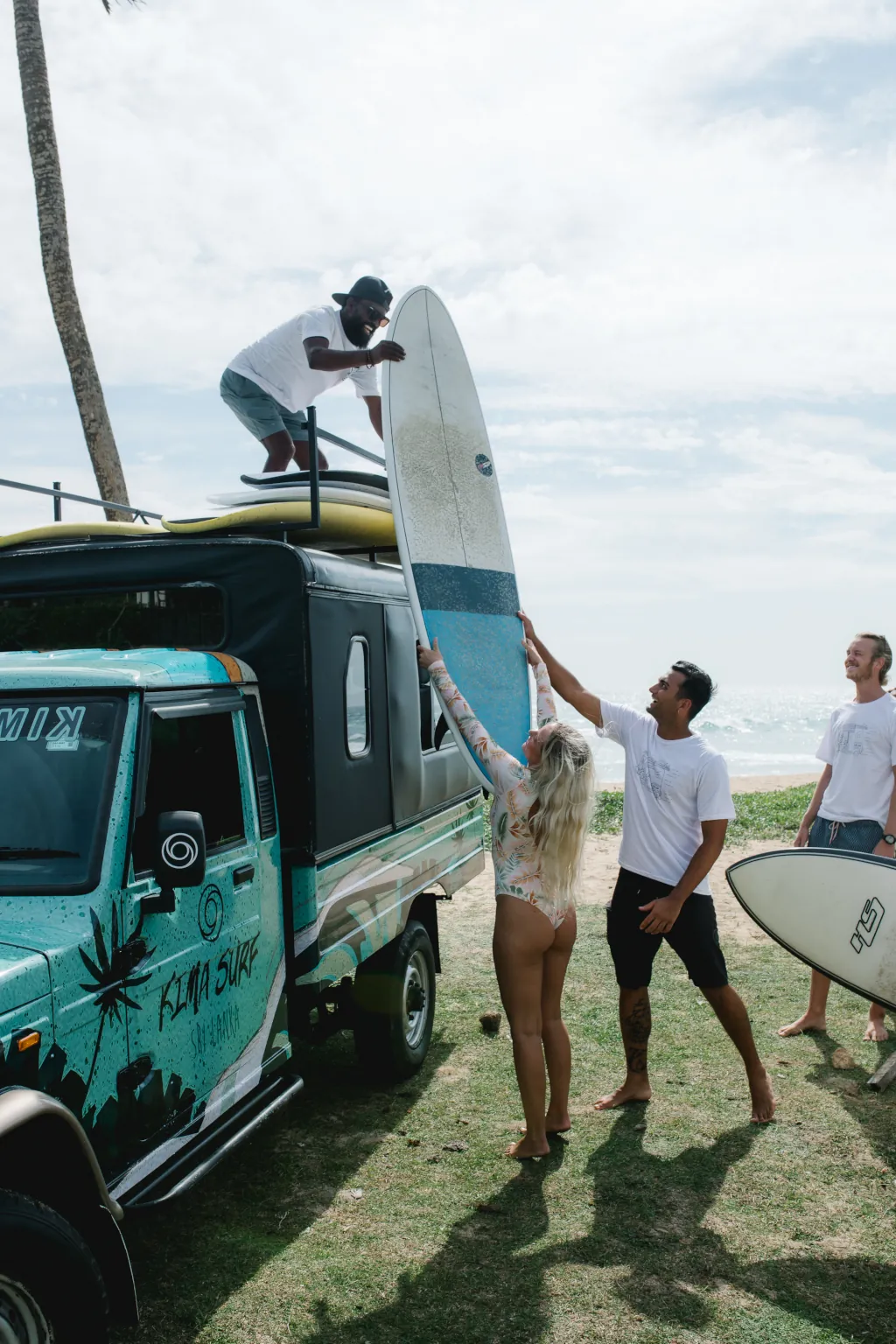
When buying a surfboard knowledge is power so avoid those impulsive decisions based just on a cool graphic! Instead take the time to learn about different board types, sizes and shapes. And most importantly: ask questions! Feel absolutely free to reach out to our surf department for expert advice.
At Kima we offer regular classrooms on various topics to quickly deepen your surf knowledge. Join these sessions to get essential insights into different surfboard types, learn how to read the waves, understand crucial surf etiquette and much more.
The process of buying a surfboard is super fun but it requires a little bit of knowledge, patience and some testing. With these five tips you are ready to embark on your journey and ride the waves on your new board with total confidence and joy.