

Sri Lanka Language Guide & Surf Lingo
Talk Like a Local
There is a moment on every surf trip where knowing a few words of the local language changes everything.
A simple “Ayubowan” to your tuk-tuk driver, a “Bohoma stuti” to the chef serving you the best rice and curry of your life, or a friendly “Kohomada?” to the local surfer paddling out next to you. Suddenly, you aren’t just a tourist passing through, you’re someone making a real effort to connect. And in Sri Lanka, that effort is always met with the warmest smile you will ever see!
This guide covers the basics of both the biggest official Sri Lankan languages, Sinhala, plus a crash course in surf lingo. So you know exactly what your coaches and fellow surfers are talking about in the lineup. Whether you’re heading to Kima Weligama or Kima Hiriketiya, or somewhere else around Sri Lanka, a little language goes a very long way!
Sri Lanka's Two Official Languages
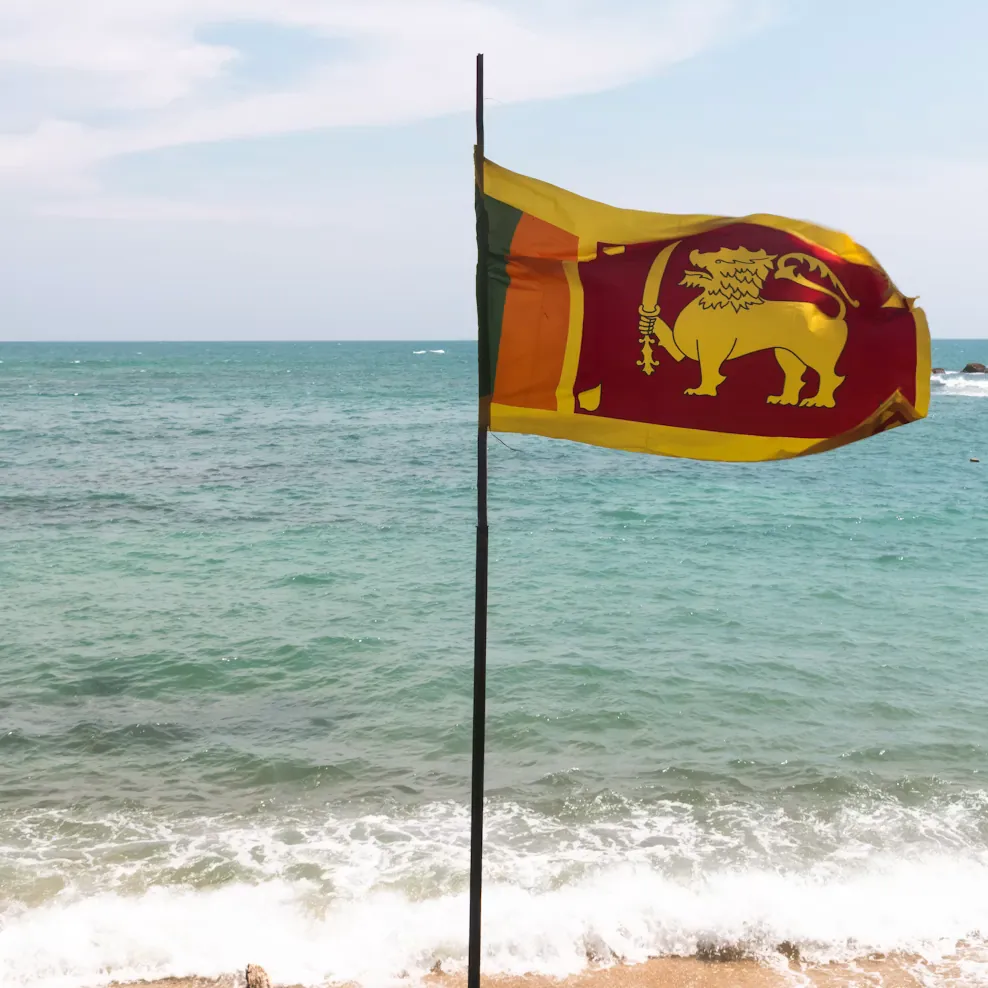
Sri Lanka has two official languages: Sinhala (spoken by around 75% of the population) and Tamil (spoken by around 25%, predominantly in the north and east). English is widely understood in tourist areas, surf towns, and among younger generations, so navigating daily life is always easy.
The south coast, where both our camps in Weligama and Hiriketiya are located, is predominantly Sinhala-speaking. If you’re heading to the east coast and Arugam Bay during summer, Tamil becomes more useful. Don’t worry if you are not fluent, even a handful of Sinhala phrases will really delight the people you meet!
Greetings & Basics
| English | Sinhala | Pronunciation |
| Hello! | Ayubowan! | Ah-yu-boh-wan |
| How are you? | Kohomada? | Ko-ho-ma-da? |
| I’m fine, thank you | Mama honda, bohoma stuti | Ma-ma hon-da, bo-ho-ma stu-ti |
| Thank you | Bohoma stuti | Bo-ho-ma stu-ti |
| Yes | Ow | Oh |
| No | Naha | Na-ha |
| Please | Karunakara | Ka-ru-na-ka-ra |
| Sorry / Excuse me | Samawenna | Sa-ma-wen-na |
| Goodbye | Gihin ennam | Gi-hin en-nam |
| My name is… | Mage nama… | Ma-ge na-ma |
| How much is it? | Meeka Kiyadha | Mee-ka Ki-ya-dha |
| Mon / Tue / Wed / Thu / Fri / Sat / Sun | Sandaudaa / Angaharauvaadaa / Badaadaa / Barahasapatainadaa / Sakurada / Senasurada / Iraidaa |
Making New Connections
| English | Sinhala | Pronunciation |
| What is your name? | Nama mokakda? | Na-ma mo-kak-da? |
| My name is… | Mage nama… | Ma-ge na-ma |
| Where are you from? | Koheda oya inne? | Ko-he-da o-ya in-ne? |
| I am from… | Ma paeminiye | Ma-pae-mi-ni-ye |
| How old are you? | Oyage vayasa kiyada? | Oya-ge → Oh-yah-geh Vayasa → Vah-yah-sah Kiyada → Kee-yah-dah |
| Do you surf? | Oyaa surf karanawada? | O-yaa surf ka-ra-na-wa-da? |
| Let’s surf together! | Api ekata surf karamu! | A-pi e-ka-ta surf ka-ra-mu! |
| The waves are good today! | Ada ralla hondai! | A-da ral-la hon-dai! |
| See you tomorrow! | Heta hamuwemu! | He-ta ha-mu-we-mu! |
| Let’s eat together! | Api ekata kamu! | A-pi e-ka-ta ka-mu! |
| Cheers! | Jayawewa! | Ja-ya-we-wa! |
Food & Drink
| English | Sinhala | Pronunciation |
| Water | Jalaya | Ja-la-ya |
| Food | Kama | Ka-ma |
| Rice and curry | Bath curry | Bath cur-ry |
| Delicious | Rasai | Ra-sai |
| Beer | Biyara | Bi-ya-ra |
| Coconut | Pol | Pol |
| Bill / Check | Bil eka | Bil e-ka |
| Can I have the bill? | Mokadda bill ekak denna? | Mo-kad-da bill e-kak den-na? |
| I am vegetarian / vegan | Mama shakahari / vishe shakahari | Ma-ma sha-ka-ha-ri |
| I am really hungry / thirsty | Mata hari badaginiyi / Mata hari thibahai | Mah-tah hah-ree bah-dah-gee-nee-yee / Mah-tah hah-ree thee-bah-hai |
| One small / big beer please | Karunakara podi beer ekak | Kah-roo-nah-kah-rah-lah poh-dee beer eh-kak |
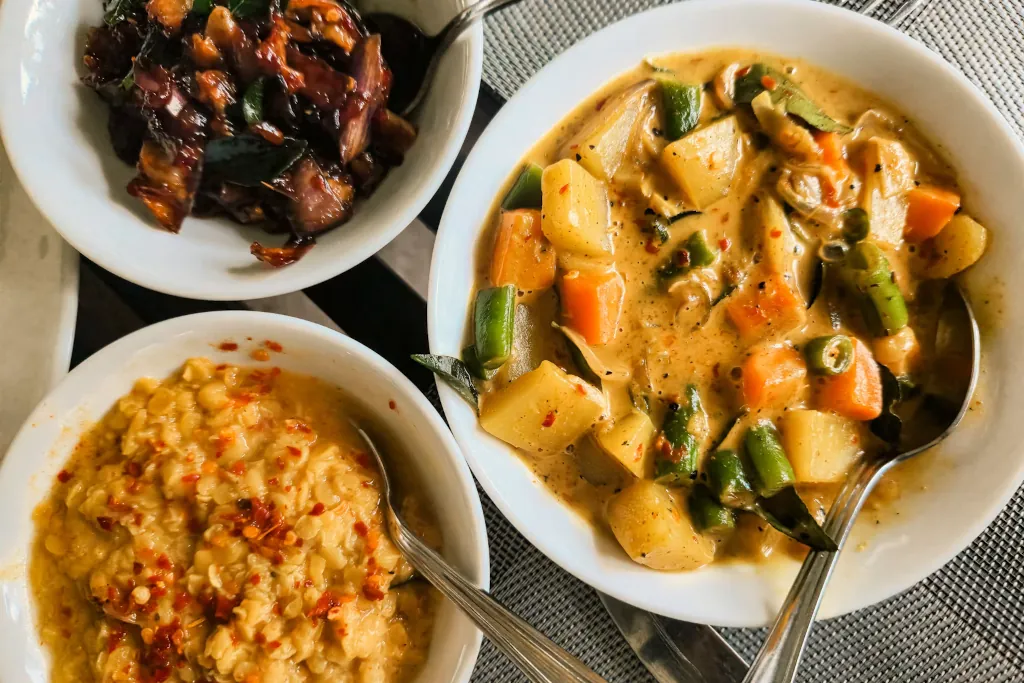
| The food tastes very good | Kaama godak rasai! | Kaa-ma go-dak ra-sai! |
Numbers
Useful for bargaining at markets, ordering food, or just counting your wave count at the end of a session!
| Number | Sinhala |
| 1 | Eka |
| 2 | Deka |
| 3 | Tuna |
| 4 | Hatara |
| 5 | Paha |
| Number | Sinhala |
| 6 | Haya |
| 7 | Hata |
| 8 | Ata |
| 9 | Namaya |
| 10 | Daaha |
Tip on Pronunciation: Both Sinhala and Tamil are phonetic languages, what you see is (roughly) what you say. Don’t overthink it. Even an imperfect attempt will be received with warmth and encouragement. Sri Lankans are genuinely proud of their language and culture, and any effort you make will be appreciated!
Surf Lingo: The Words You'll Hear in the Lineup
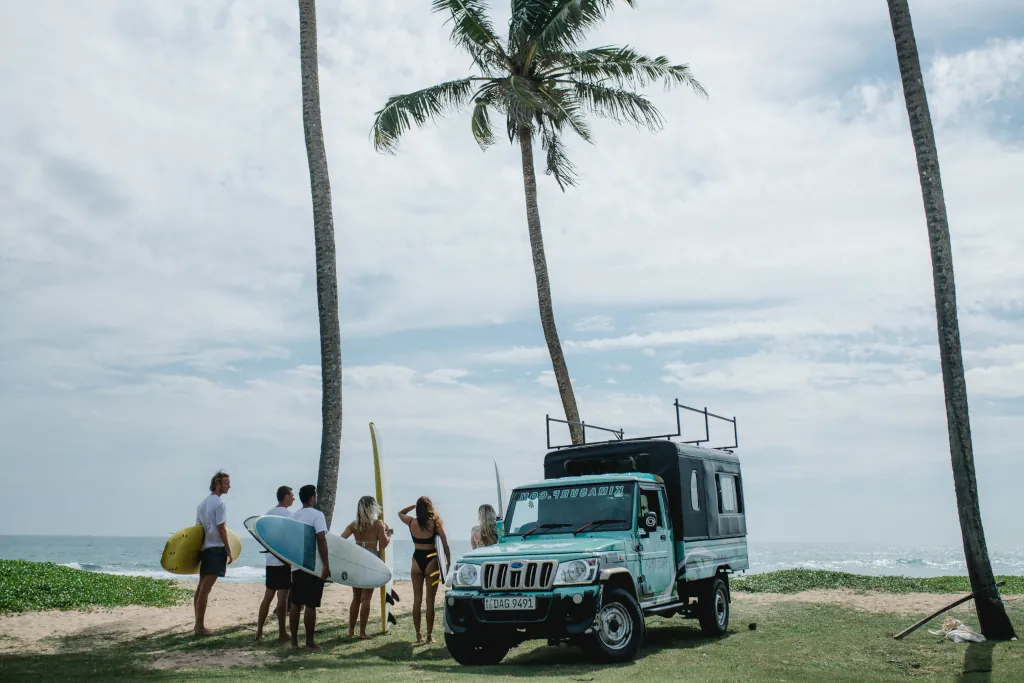
Sri Lanka’s surf scene speaks a universal language: the language of waves. Whether you’re a beginner at Weligama Bay or an experienced surfer at Hiriketiya Point, you’ll hear these words every day. Are you ready for a crash course?
Waves & Conditions
Set – A group of larger waves rolling in together. “Set coming!” means get ready (or get out of the way).
Swell – The energy moving through the ocean that creates waves. A “good swell” means great waves are on the way.
Offshore – Wind blowing from the land toward the sea, grooming the wave faces into clean, smooth walls. The best condition to surf in.
Onshore – Wind blowing from the sea toward the land, making waves choppy and messy. Less ideal.
Glassy – Perfectly calm, mirror-like ocean surface with no wind. The most beautiful condition to surf in and very common in Sri Lanka.
Closeout – A wave that breaks all at once along its entire length, leaving no rideable face. Frustrating, but part of the game.
A-frame – A wave that peaks in the middle and breaks equally left and right, giving options for all surfers.
Overhead – Wave height above your head. “It’s overhead” means powerful, exciting conditions.
Beach break – A wave that breaks over a sandy sea bed. Weligama Bay is a perfect beach break. Forgiving, consistent, and great for learning.
Reef break – A wave that breaks over a coral reef or rocky sea bed. More powerful and hollow, and requires a bit more experience.
Pumping – When the conditions are absolutely perfect. “It’s pumping out there!”
In the Lineup
Lineup – The zone just beyond the breaking waves where surfers wait for sets. This is where the social life of surfing happens.
Caught inside – Being trapped between the breaking waves and the shore. Wait for the set to pass before paddling back out. Also known as the “White Zone” or “Crash Zone.”
Clean-up set – A larger-than-average set that breaks further out, clearing the lineup. Respect it.
Drop-in – Catching a wave that another surfer already has priority on. One of the biggest no-nos in surfing, dangerous and disrespectful. Read our surf etiquette guide before paddling out.
Party wave – When multiple surfers ride the same wave together. Usually joyful, occasionally chaotic.
Kook – A surfer with poor knowledge of skills or etiquette who interferes with others in the water. Everyone starts as one. The key is learning fast, our 5 day Learn-To-Surf Program helps with exactly that.
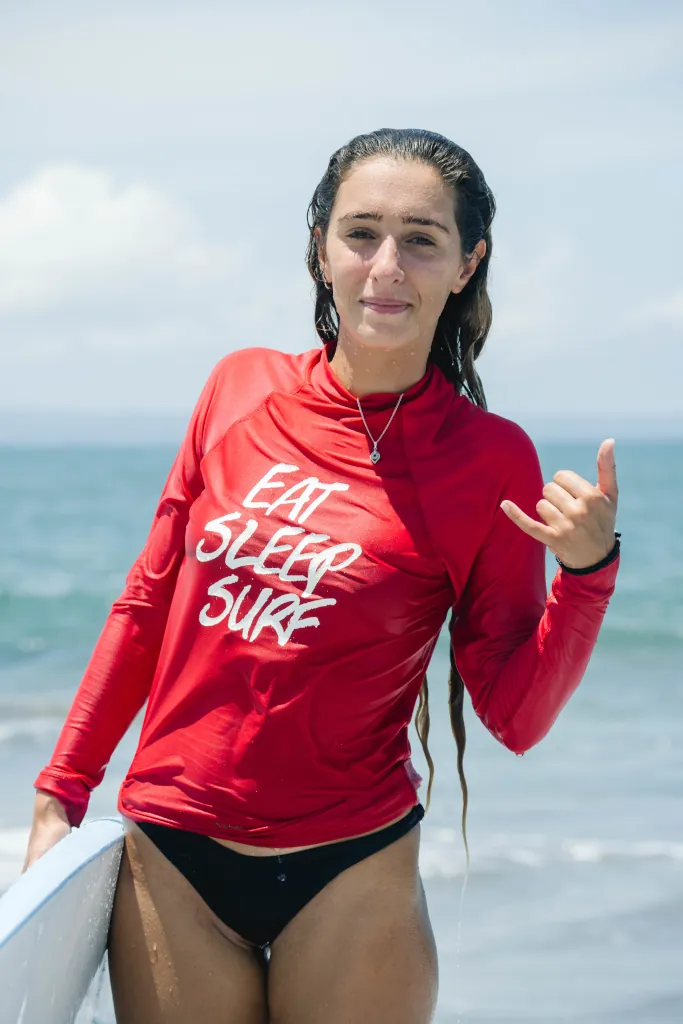
Hang loose / Shaka – The hand signal with extended thumb and little finger. The universal symbol of surf culture.
On the Board
Pop-up – The motion of jumping from lying on the board to standing in one quick movement. The most important skill to nail first. Read our 5 tips for a better pop-up.
Frontside – Surfing while facing the wave.
Backside – Surfing with your back toward the wave.
Regular – Surfing with your left foot forward.
Goofy – Surfing with your right foot forward.
Bottom turn – Your first turn at the bottom of the wave after the takeoff. The foundation of almost every manoeuvre that follows.
Cutback – A sharp turn back toward the breaking part of the wave to stay in the power zone.
Aerial – An advanced manoeuvre where both the surfer and the board leave the surface of the wave. Save this one for later.
Barrel / Tube / Green Room – The hollow, cylindrical space inside a breaking wave. Getting inside one is many surfers’ ultimate goal.
Hang five / Hang ten – Classic longboard moves. Hang five = one foot on the nose with five toes hanging over the edge. Hang ten = both feet, all ten toes over the nose. Pure style.
Duck dive – Pushing your board under an oncoming wave when paddling out. Works best on hard tops and shortboards.
Turtle roll – Rolling under a breaking wave with your board, used on soft tops and longboards that can’t be duck dived.
Ding – Any damage to your surfboard; cracks, holes, or fractures. Fix it before going back in the water. Our surfboard insurance add-on covers all repair costs on rental boards.
Quiver – A surfer’s collection of surfboards. At Kima, we have a Premium Surfboard Collection so you always have the right board for the conditions.
Rails – The sides of your surfboard, running from nose to tail. Important for turning.
Washing machine – Getting tumbled around underwater by a breaking wave. Relax, go limp, and it’ll spit you out.
Stoked – Pure, unfiltered joy. After a great wave, a great session, or honestly just being in the ocean. The universal surfer emotion.
Wipeout – Falling off your board. Happens to everyone, every session, at every level. Embrace it.
Ready to Talk the Talk?
That’s a lot of new words, but don’t let it overwhelm you! Download this page, read it on the plane, and by the time you land you’ll already know more than most. The rest you’ll easily pick up once you’re here. The best way to learn a language is to be surrounded by it. And Sri Lanka will wrap you in both of them from the moment you arrive.
See you in the lineup, or as they say in Sri Lanka: Lineup eken hamuwemu!